
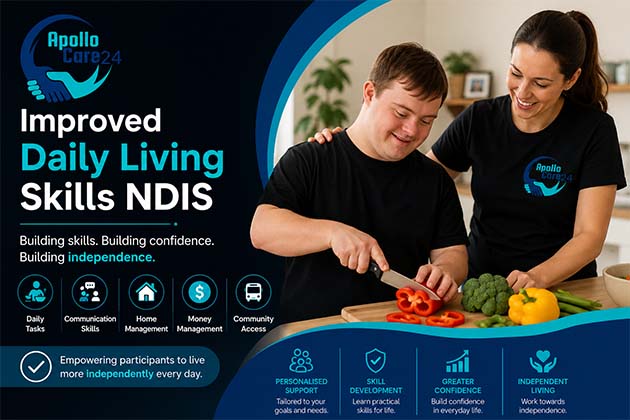
Living independently is a goal shared by many people, but for individuals living with a disability, everyday activities can sometimes be more challenging. Tasks like preparing meals, managing money, travelling safely, communicating with others, or maintaining a household often require additional support and guidance.
That’s where Improved Daily Living Skills NDIS comes in.
This Capacity Building support helps eligible NDIS participants develop practical skills that increase independence, confidence, and participation in everyday life. Rather than simply completing tasks for participants, these supports focus on teaching valuable life skills that promote long-term independence.
Whether you’re new to the NDIS or looking to better understand how this funding works, this guide explains everything you need to know about Improved Daily Living Skills, including its benefits, eligibility, examples of supports, and how providers like Apollo Care 24 can help you achieve your goals.
Quick Answer
Improved Daily Living Skills NDIS is a Capacity Building support category designed to help participants develop practical life skills for greater independence. These supports may include assistance with personal care, cooking, budgeting, communication, household management, travel training, and other everyday activities that align with a participant’s NDIS goals.
Table of Contents
- What Are Improved Daily Living Skills NDIS?
- Why Daily Living Skills Matter
- What Skills Can Be Improved?
- Benefits of Improved Daily Living Skills NDIS
- Who Can Access These Supports?
- How Does NDIS Funding Work?
- How Apollo Care 24 Can Help
- Frequently Asked Questions
- Final Thoughts
What Are Improved Daily Living Skills NDIS?
Improved Daily Living Skills is one of the Capacity Building support categories within the National Disability Insurance Scheme (NDIS). Its purpose is to help participants build the knowledge, confidence, and practical abilities needed to live more independently.
Unlike supports that provide ongoing assistance with completing daily tasks, Improved Daily Living focuses on helping participants learn how to perform those tasks themselves whenever possible.
These supports are usually delivered by qualified professionals, therapists, or experienced support workers who create personalised strategies based on each participant’s goals and individual needs.
Every participant is different, which means there is no single approach to developing daily living skills. Support plans are tailored to each person’s abilities, challenges, and long-term aspirations.
Why Daily Living Skills Matter
Daily living skills form the foundation of independent living. From preparing breakfast to catching public transport or managing appointments, these everyday activities contribute significantly to a person’s confidence and quality of life.
When participants improve these practical skills, they often experience greater independence, stronger self-esteem, and increased participation within their communities.
Rather than relying heavily on family members or carers, participants gain the confidence to make decisions, solve problems, and manage many aspects of daily life on their own.
These improvements can also create new opportunities for education, volunteering, employment, and stronger social relationships.
What Skills Can Be Improved?
One of the strengths of Improved Daily Living Skills NDIS is its flexibility. Supports are personalised according to the participant’s goals, meaning different people may focus on different areas of skill development.
Some of the most common daily living skills include:
Personal Care Skills
Participants may learn to manage personal hygiene, dressing, grooming, medication routines, and healthy lifestyle habits more independently.
Improving personal care skills can boost confidence while promoting better health and wellbeing.
Cooking and Meal Preparation
Preparing nutritious meals is an essential life skill.
Support may include:
- Planning weekly meals
- Grocery shopping
- Safe food handling
- Cooking simple recipes
- Using kitchen appliances safely
- Cleaning up after meals
These skills help participants become more self-sufficient while encouraging healthier eating habits.
Household Management
Managing a home involves much more than cleaning.
Participants may develop skills related to:
- Laundry
- Vacuuming
- Cleaning bathrooms
- Organising personal belongings
- Maintaining daily routines
- Basic home safety
Learning these responsibilities can increase independence while creating a more comfortable living environment.
Money Management
Financial skills are important for everyday life.
Support may include learning how to:
- Create a budget
- Understand spending habits
- Compare prices
- Save money
- Pay bills
- Shop independently
Developing these skills allows participants to make informed financial decisions with greater confidence.
Communication Skills
Effective communication supports stronger relationships and increased community participation.
Participants may improve their ability to:
- Express needs clearly
- Build conversations
- Ask for help
- Advocate for themselves
- Improve listening skills
- Increase confidence in social situations
Strong communication skills are valuable both personally and professionally.
Community Access and Travel Training
Travelling independently is an important milestone for many participants.
Supports may include:
- Understanding transport routes
- Purchasing tickets
- Planning journeys
- Road safety awareness
- Building confidence while travelling alone
Greater travel confidence often leads to increased community participation and improved independence.
Social Skills
Positive social interactions improve overall wellbeing.
Participants may work on:
- Making friends
- Joining community groups
- Building confidence
- Respecting boundaries
- Participating in social activities
- Managing relationships
These skills can help reduce social isolation while encouraging active participation within the community.
Benefits of Improved Daily Living Skills NDIS
The ultimate goal of Improved Daily Living Skills NDIS is to empower participants to become more independent and confident in managing everyday life. Rather than relying on ongoing assistance, participants learn practical skills that help them achieve long-term success.
Here are some of the key benefits of this support.
Greater Independence
One of the biggest advantages is increased independence.
As participants learn practical life skills, they become more capable of managing everyday tasks on their own. Simple activities like preparing meals, managing appointments, or maintaining personal hygiene become less overwhelming and more achievable.
Greater independence also gives participants more choice and control over their lives, which is one of the core principles of the NDIS.
Improved Confidence
Learning new skills naturally builds confidence.
Every achievement—whether it’s cooking a meal independently or successfully using public transport—helps participants believe in their own abilities.
This growing confidence often encourages participants to take on new challenges, become more socially active, and pursue personal goals they previously thought were out of reach.
Better Community Participation
Daily living skills extend beyond the home.
When participants gain confidence in communication, travel, budgeting, and social interaction, they are more likely to participate in community activities, recreational programs, volunteer work, education, or employment.
Improved community participation can lead to stronger friendships, better mental wellbeing, and a greater sense of belonging.
Enhanced Quality of Life
Developing everyday skills often leads to a better overall quality of life.
Participants gain more freedom to make decisions, follow routines, manage responsibilities, and enjoy meaningful activities that support their wellbeing.
These improvements benefit not only the participant but also their family members and support network.
Who Can Access Improved Daily Living Skills NDIS?
Improved Daily Living Skills are available to eligible NDIS participants whose approved plans include funding for Capacity Building supports.
The type of support funded depends on each participant’s individual goals, disability-related needs, and the recommendations provided during the planning process.
Participants who may benefit include those who want to:
- Improve personal care skills
- Learn cooking and meal preparation
- Build communication skills
- Develop budgeting and money management abilities
- Increase confidence in community participation
- Learn household management
- Improve travel skills
- Become more independent in everyday life
It’s important to remember that every NDIS plan is personalised. The supports included in one participant’s plan may differ from another participant’s funding.
How Does Improved Daily Living NDIS Funding Work?
Funding for Improved Daily Living Skills NDIS generally falls under the Capacity Building budget.
Unlike Core Supports, which often focus on providing direct assistance, Capacity Building supports are designed to help participants develop long-term skills and independence.
Depending on individual circumstances, funding may cover services delivered by qualified professionals such as:
- Occupational Therapists
- Speech Pathologists
- Psychologists
- Physiotherapists
- Behaviour Support Practitioners
- Experienced support professionals
The exact supports available depend on what is considered reasonable and necessary under the participant’s NDIS plan.
Before requesting funding, it’s helpful to identify:
- Which daily activities are challenging
- Which skills you want to improve
- How these improvements will increase your independence
- What long-term goals you hope to achieve
Clear goals and supporting evidence can help demonstrate why these supports are important.
How Apollo Care 24 Can Help
At Apollo Care 24, we understand that every participant’s journey is unique.
Our team takes a person-centred approach, working closely with participants to understand their goals, strengths, and support needs before developing a personalised plan.
Rather than simply completing tasks, we focus on helping participants gain the confidence and practical skills needed for greater independence.
Depending on individual goals, our support may include assistance with:
- Building personal care routines
- Developing cooking skills
- Household organisation
- Community participation
- Communication and social confidence
- Daily routine planning
- Shopping and budgeting
- Independent travel practice
We believe that small improvements can create life-changing outcomes, and we’re committed to supporting participants every step of the way.
Frequently Asked Questions
What is Improved Daily Living Skills NDIS?
It is a Capacity Building support category that helps eligible NDIS participants develop practical life skills for greater independence.
Is Improved Daily Living different from Core Supports?
Yes. Core Supports generally provide direct assistance with everyday activities, while Improved Daily Living focuses on teaching participants the skills to complete those activities independently.
What types of skills can be developed?
Participants may develop skills related to personal care, cooking, household management, budgeting, communication, travel training, social interaction, and daily routines.
Who delivers Improved Daily Living supports?
Supports may be delivered by qualified therapists, allied health professionals, or experienced disability support providers, depending on the participant’s needs and NDIS plan.
Can these supports help participants live independently?
Yes. The primary purpose of Improved Daily Living Skills is to increase independence by helping participants build practical skills they can use every day.
Final Thoughts
Developing everyday life skills is an important step towards greater independence, confidence, and community participation.
Through Improved Daily Living Skills NDIS, participants have the opportunity to learn practical abilities that support everyday life, from managing personal care and household tasks to improving communication, budgeting, and travel skills.
Rather than focusing solely on immediate assistance, these supports empower participants with skills they can continue using for years to come.
At Apollo Care 24, we’re committed to helping participants build confidence, achieve their NDIS goals, and enjoy greater independence through personalised, person-centred support.
If you or a loved one would like to learn more about Improved Daily Living Skills NDIS, our friendly team is here to help you explore the supports available and take the next step towards a more independent future.