


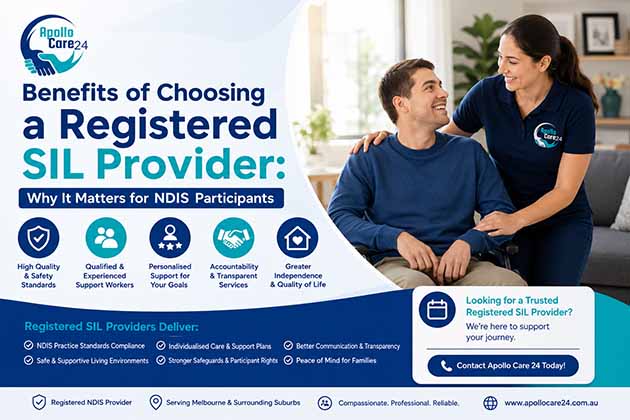
Choosing a registered SIL provider gives NDIS participants confidence that their Supported Independent Living services meet strict national quality and safety standards. Registered providers employ trained support workers, follow NDIS Practice Standards, and deliver personalised care that promotes independence, dignity, and long-term wellbeing. For participants with high-support needs, registration also ensures greater accountability, professional oversight, and peace of mind for families.
Why Choosing a Registered SIL Provider Matters for NDIS Participants
Selecting a Supported Independent Living (SIL) provider is one of the most important decisions an NDIS participant can make. The provider you choose plays a significant role in your daily life, from helping with personal care and household tasks to supporting social participation, building life skills, and achieving long-term independence.
While both registered and unregistered providers may offer SIL services, there are important differences in quality assurance, compliance, staff training, and accountability. A registered SIL provider must meet strict standards set by the NDIS Quality and Safeguards Commission, giving participants and their families greater confidence in the services they receive.
Whether you’re exploring SIL for the first time or considering changing providers, understanding the benefits of choosing a registered provider can help you make an informed decision that supports your goals and protects your wellbeing.
What Is a Registered SIL Provider?
A registered SIL provider is an organisation that has been officially approved by the NDIS Quality and Safeguards Commission to deliver Supported Independent Living services. Registration is not simply a title—it requires providers to demonstrate that they consistently meet rigorous standards for participant safety, service quality, governance, and continuous improvement.
To maintain registration, providers must:
- Meet the NDIS Practice Standards
- Undergo independent quality audits
- Implement strong risk management processes
- Protect participant rights and privacy
- Employ suitably qualified and trained support workers
- Maintain clear complaints and incident management procedures
- Commit to ongoing service improvement
These requirements help ensure that participants receive reliable, respectful, and high-quality support every day.
Understanding Supported Independent Living (SIL)
Supported Independent Living (SIL) is an NDIS-funded support designed for people with higher support needs who require regular assistance to live as independently as possible. SIL focuses on helping participants build skills while receiving the daily support they need in a shared home or individual living arrangement.
SIL funding may include assistance with:
- Personal care and hygiene
- Meal preparation
- Household cleaning and laundry
- Medication prompts and daily routines
- Community participation
- Building independent living skills
- Overnight or 24/7 support where required
The ultimate goal of SIL is not simply to provide assistance but to empower participants to develop confidence, make choices, and enjoy greater independence in their everyday lives.
Why Choosing the Right SIL Provider Is So Important
Every NDIS participant has unique goals, preferences, and support requirements. The right SIL provider understands these individual needs and creates personalised support plans that encourage independence while respecting personal choice and dignity.
A high-quality provider can positively influence many aspects of daily life, including:
- Physical health and wellbeing
- Emotional confidence
- Community participation
- Social relationships
- Daily routines
- Independent living skills
- Personal safety
- Overall quality of life
On the other hand, choosing a provider that lacks strong systems, experienced staff, or appropriate safeguards can result in inconsistent support, communication issues, and limited opportunities for participants to achieve their goals.
This is why many participants and families choose a registered SIL provider—the additional oversight and quality standards provide reassurance that services are delivered professionally, safely, and with the participant’s best interests at heart.
Why Registration Builds Trust
Registration demonstrates that a provider has invested in meeting nationally recognised quality standards rather than simply offering support services. It reflects a commitment to accountability, transparency, and continuous improvement.
For participants and families, this means greater confidence that:
- Support workers receive appropriate training.
- Services are regularly reviewed for quality.
- Participant rights are protected.
- Complaints are taken seriously and managed appropriately.
- Safety procedures are clearly documented and followed.
- Care is delivered in line with nationally recognised best practices.
When choosing someone to support your daily life, these factors can make a significant difference—not only in the quality of support you receive but also in your confidence, independence, and long-term wellbeing.
Top Benefits of Choosing a Registered SIL Provider
Choosing a registered SIL provider is about more than meeting NDIS requirements—it’s about ensuring you receive safe, reliable, and person-centred support that helps you achieve your goals. Below are some of the most important advantages of working with a registered provider.
1. High Standards of Quality and Safety
One of the biggest benefits of a registered SIL provider is the assurance that services meet the NDIS Practice Standards and the requirements of the NDIS Quality and Safeguards Commission.
Registered providers are regularly audited to ensure they maintain high standards of care, governance, and participant safety.
This means participants can expect:
- Safe support environments
- Consistent service delivery
- Professional care practices
- Ongoing quality improvement
For families, this provides valuable peace of mind knowing their loved one is receiving support from an organisation that is independently monitored.
2. Qualified and Experienced Support Workers
Registered providers invest in recruiting, training, and developing skilled support workers who understand the diverse needs of NDIS participants.
Support workers are typically trained in areas such as:
- Personal care
- Manual handling
- Medication assistance
- Positive behaviour support
- Communication techniques
- Participant rights
- Emergency response procedures
Experienced staff are better equipped to provide respectful, compassionate, and effective support while encouraging participants to build confidence and independence.
3. Personalised Support That Focuses on Your Goals
Every participant has different aspirations, abilities, and support needs.
A registered SIL provider works closely with participants, families, and support coordinators to develop an individualised support plan that aligns with personal goals.
This may include support to:
- Learn cooking skills
- Improve personal hygiene routines
- Build confidence using public transport
- Develop budgeting skills
- Increase social participation
- Gain greater independence around the home
Rather than taking control, registered providers encourage participants to make decisions and develop life skills at their own pace.
4. Greater Accountability and Transparency
Because registered providers operate under strict regulatory requirements, they must maintain clear systems for:
- Incident management
- Participant feedback
- Complaints handling
- Record keeping
- Risk management
- Continuous improvement
If an issue arises, participants have confidence that appropriate procedures are in place to investigate concerns and improve future services.
This level of accountability is one of the key reasons many families prefer registered providers.
5. Better Protection of Participant Rights
Respecting participant choice and control is a core principle of the NDIS.
Registered SIL providers are required to protect participants’ rights by promoting:
- Privacy
- Dignity
- Respect
- Cultural inclusion
- Freedom from abuse and neglect
- Individual decision-making
These protections help create an environment where participants feel valued, respected, and empowered.
6. Consistent and Reliable Support
Consistency plays a major role in building trust between participants and support workers.
Registered providers generally have structured systems that help ensure:
- Reliable rostering
- Appropriate staff replacement when needed
- Clear communication
- Continuity of care
- Ongoing supervision
This consistency allows participants to establish routines, develop relationships with support workers, and feel more comfortable in their daily lives.
7. Improved Communication with Families and Support Teams
Successful Supported Independent Living often involves collaboration between multiple people, including:
- Families
- Guardians
- Support coordinators
- Allied health professionals
- Behaviour support practitioners
Registered providers typically have strong communication processes that keep everyone informed while respecting participant privacy and preferences.
Good communication leads to better outcomes and ensures everyone is working towards the participant’s goals.
8. Continuous Quality Improvement
Registration isn’t a one-time achievement.
Registered SIL providers must regularly review their services and identify opportunities for improvement.
This includes:
- Staff training updates
- Participant feedback
- Internal reviews
- Independent audits
- Policy improvements
- Risk assessments
As a result, participants benefit from services that continue to evolve and improve over time.
9. Increased Confidence for Families
Choosing Supported Independent Living is a significant step for both participants and their families.
Knowing that a provider is registered and independently assessed provides reassurance that:
- Safety procedures are in place.
- Staff receive ongoing training.
- Services meet national quality standards.
- Participants are treated with dignity and respect.
This confidence helps families focus on supporting their loved one’s independence rather than worrying about the quality of care.
10. Better Long-Term Outcomes for Participants
Ultimately, the goal of Supported Independent Living is to help participants live more independently while enjoying a fulfilling life.
A registered SIL provider supports long-term success by encouraging participants to:
- Build confidence
- Develop practical life skills
- Increase community participation
- Strengthen relationships
- Make informed choices
- Achieve personal goals
These positive outcomes contribute to greater independence, improved wellbeing, and a higher quality of life.
Registered vs Unregistered SIL Providers
Choosing between a registered and unregistered provider can be challenging. The following comparison highlights some of the key differences.
| Feature | Registered SIL Provider | Unregistered SIL Provider |
|---|---|---|
| NDIS Commission Registration |  Yes Yes |  No No |
| Independent Quality Audits | Yes | Not Required |
| NDIS Practice Standards | Required | Not Mandatory |
| Staff Training Requirements | Higher Standards | Varies |
| Complaints Management System | Required | May Differ |
| Risk Management Procedures | Comprehensive | Varies |
| Continuous Quality Improvement | Ongoing | Optional |
| Participant Safeguards | Strong | Depends on Provider |
| Accountability | High | Varies |
| Peace of Mind | Greater | Depends on Individual Provider |
It’s important to remember that some unregistered providers also deliver excellent services. However, choosing a registered SIL provider offers additional assurance because the organisation is independently assessed against nationally recognised quality and safety standards.
How to Choose the Right Registered SIL Provider
Before making a decision, consider asking the following questions:
- Is the provider registered with the NDIS Quality and Safeguards Commission?
- What experience do they have supporting people with needs similar to mine?
- Can I meet my support workers before services begin?
- How do they personalise support plans?
- What happens if my regular support worker is unavailable?
- How do they manage complaints or concerns?
- Can they help me work towards my long-term goals?
- Do they encourage participant choice and independence?
Taking time to ask these questions can help you find a provider that aligns with your values, goals, and support needs.
Why Apollo Care 24 Is a Trusted Registered SIL Provider
At Apollo Care 24, we believe Supported Independent Living is about more than providing assistance—it’s about empowering people to live the life they choose.
As a registered SIL provider, we deliver person-centred support that promotes independence, confidence, dignity, and meaningful community participation. Every participant has unique goals, and our experienced support team works closely with participants, families, and support coordinators to create personalised support plans that reflect those goals.
Whether you require assistance with daily living, personal care, household tasks, social participation, or 24/7 support, we’re committed to delivering high-quality services in a safe, respectful, and supportive environment.
When you choose Apollo Care 24, you’re choosing a team that genuinely cares about helping you achieve greater independence and enjoy a better quality of life.
Frequently Asked Questions
Is it better to choose a registered SIL provider?
For many NDIS participants, yes. Registered SIL providers meet strict quality and safety standards set by the NDIS Quality and Safeguards Commission, offering greater accountability, participant protection, and professional service delivery.
What does a registered SIL provider do?
A registered SIL provider delivers Supported Independent Living services while complying with NDIS Practice Standards. They help participants with daily living tasks, personal care, skill development, household responsibilities, and community participation.
Can self-managed participants use a registered SIL provider?
Yes. Depending on your NDIS plan and funding arrangements, self-managed and plan-managed participants may choose to receive services from a registered SIL provider.
Are registered SIL providers audited?
Yes. Registered providers undergo regular independent audits to ensure they continue meeting the NDIS Practice Standards and quality requirements.
Do registered SIL providers offer 24/7 support?
Many registered providers offer around-the-clock support where it aligns with a participant’s NDIS plan and individual needs.
What is the difference between SIL and SDA?
Supported Independent Living (SIL) funds the support you receive, while Specialist Disability Accommodation (SDA) funds the physical home for participants with extreme functional impairment or very high support needs.
Can I change my SIL provider?
Yes. If you’re unhappy with your current provider, you can discuss changing providers with your Support Coordinator or NDIS planner, following the terms of your service agreement.
How do I know if a provider is registered?
You can ask the provider directly or search the NDIS Quality and Safeguards Commission’s register to confirm their registration status.
Does a registered provider guarantee better support?
Registration demonstrates compliance with national quality standards and accountability. While individual experiences can vary, registration provides additional assurance that the provider meets strict regulatory requirements.
Can registered SIL providers support participants with complex needs?
Yes. Many registered providers have experienced teams trained to support participants with complex physical, intellectual, neurological, and psychosocial disabilities.
What questions should I ask before choosing a SIL provider?
Ask about staff qualifications, personalised support planning, communication processes, participant rights, emergency procedures, and how they help participants achieve independence.
Why should families choose a registered SIL provider?
Families often prefer registered providers because they offer greater transparency, stronger safeguarding measures, qualified support workers, and compliance with nationally recognised quality standards.
Final Thoughts
Choosing a registered SIL provider is one of the most important decisions an NDIS participant or family can make. The right provider does more than deliver daily support—they become a trusted partner in helping participants build confidence, develop life skills, and achieve greater independence.
Registered providers operate under strict quality and safety standards, giving participants reassurance that their support is delivered professionally, respectfully, and in line with the NDIS Practice Standards.
While every participant’s journey is unique, working with a registered provider offers valuable benefits, including qualified support workers, personalised care, stronger participant safeguards, and continuous quality improvement.
If you’re exploring Supported Independent Living, taking the time to choose a trusted registered provider can make a meaningful difference to your long-term wellbeing, independence, and quality of life.